
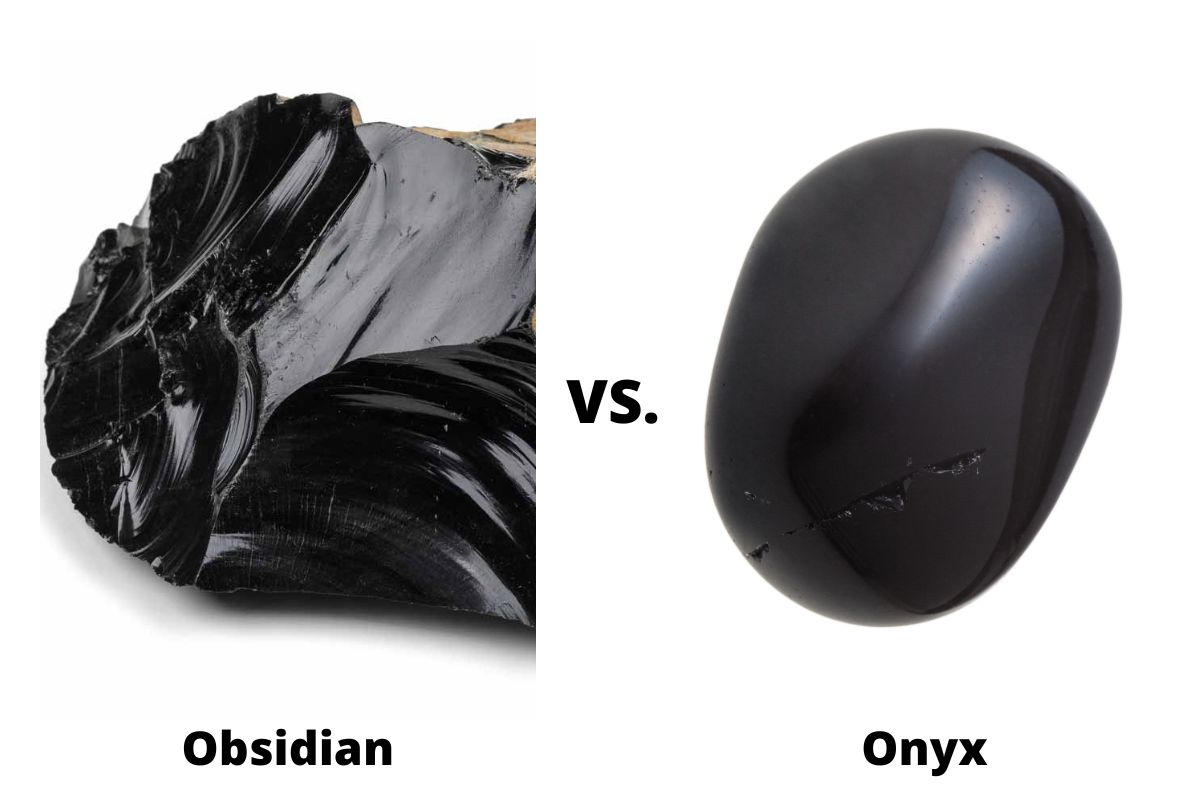
Obsidian vs. onyx are two of the most popular black gemstones, although the difference between onyx and obsidian is often confused. Both materials shine when polished and have a sleek, deep black impression, making them exciting jewelry components.
Beautiful rings, bracelets, and necklaces crafted from black onyx with black obsidian may be found in many modern and upscale jewelry collections. These black jewels are a great choice if you’re going for a sophisticated, one-of-a-kind style but don’t want to commit to a traditional color scheme.
The short answer: obsidian is natural volcanic glass, formed when lava cools too quickly to crystallize. Onyx is a banded variety of chalcedony, a microcrystalline quartz. Most black onyx sold in jewelry is chalcedony or agate that has been dyed black. Onyx is harder (about 7 on the Mohs scale, versus about 5 to 5.5 for obsidian) and slightly denser, while obsidian looks glassier and breaks with curved, very sharp edges.
Table of Contents
What Is Obsidian?
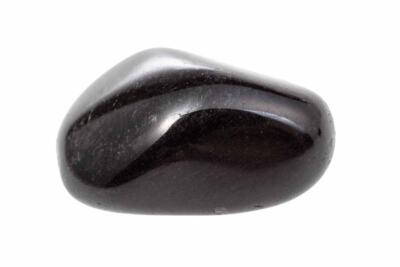
The rapid cooling of molten rock during a volcanic eruption produces black obsidian. The richness of its color makes black obsidian stone recognized by various other names, including xaga, volcanic glass, and royal agate.
Tumbled or carved, the surface of a piece of black obsidian shines brightly. Yet, even in its natural condition, it is tough and polished, with potentially dangerous sharp edges. Because of its robust qualities and striking beauty, it is employed in jewelry and decorative items.
Obsidian, a dark and dreamy volcanic glass rock, is a robust foundation for keeping you rooted in your happy life and a blade against negativity. Although some may be distracted by flashier stones, obsidian is still a stunning gem.
Obsidian: Meaning and Healing Properties
In crystal traditions, black obsidian is used as a cleansing and grounding stone. It is associated with the three lower chakras and a strong connection to the ground.
The black obsidian stone, whose polished exterior is commonly used to make crystal balls, has long been believed to open a channel between the living and the dead. To establish feng shui in the home, this anchoring force is ideal.
Obsidian is believed to give the fortitude to venture into the unknown, accept one’s true identity, and let go of attachments to things that are no longer helpful. There is so much space for growth when you practice letting go and addressing your deeper self; before you realize it, the branches you’ve been trimming unwittingly will be ready to soar.
Read more: Obsidian: Meaning, Healing Properties and Uses
What Is Onyx?
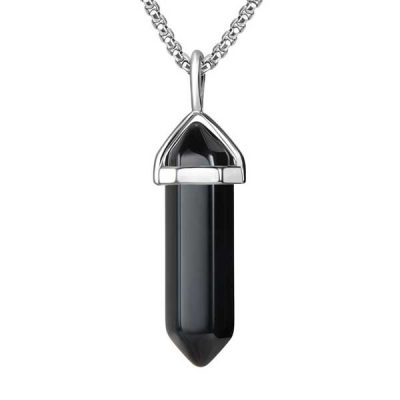
Onyx is a chalcedony made up of microscopic intergrowths of the mineral silica. Unlike the curved banding seen in many agates, the bands in onyx are straight and parallel to one another. Natural black chalcedony is rare, so most “black onyx” beads are chalcedony or agate dyed an even black.
In crystal traditions, black stones are valued as protective. Many people who wear onyx say it gives them a sense of strength and determination.
Black onyx is traditionally associated with the base chakra and with feeling connected to the earth. It is also used for scrying and other spiritual practices.
Crystal practitioners use it to strengthen the link between the feet and the base chakra, and recommend it to people who want to feel more grounded or release excess energy.
Onyx: Meaning and Healing Properties
In crystal traditions, onyx is a stone of self-discipline, associated with resisting old habits and staying focused on your goals.
Black onyx is also associated with a sense of power, vigor, stability and confidence. These meanings come from spiritual traditions rather than proven health effects, so crystals should not replace medical or psychological care.
Black onyx is a stone of the root chakra because of the wonderful grounding energy it provides. When doing psychic work or exploring past lives, which might leave you exposed, black onyx can help you maintain your sense of safety and security.
Read more: Onyx: Meaning, Healing Properties and Uses
How To Tell The Difference Between Obsidian and Onyx?
Onyx and obsidian are two of the most popular black gemstones, although they are often confused with one another. Despite their apparent resemblance, onyx and obsidian are two different gemstones with significant differences in structure, chemical qualities, and value.
Composition
Onyx has been used in jewelry and carvings for centuries. Onyx, like agate, is a chalcedony: quartz made of microscopic crystals. It forms slowly, layer by layer, in cavities in rock.
However, obsidian is not a true mineral. Instead, it is lava that cooled so quickly it solidified into volcanic glass. Like onyx, it is composed mainly of silica, but its atoms have no crystal structure. Its dark color comes from trace impurities and tiny mineral inclusions.
Appearance
Onyx is slightly denser than obsidian (specific gravity about 2.6, versus about 2.33 to 2.42 for most obsidian), so a larger piece of onyx feels a little heavier than the same size of obsidian. With small beads, the difference is too slight to judge by hand. In contrast to onyx, which is made of tiny quartz crystals, obsidian is a natural glass, a volcanic (igneous) rock with no crystals at all.
Another visible distinction between black onyx and black obsidian is that onyx typically has a slightly duller, waxier finish, while obsidian looks glassier. Chipped obsidian also shows curved, shell-like (conchoidal) breaks with very sharp edges. Don’t put too much stock in the fact that a black onyx may look remarkably glassy with a good polish.
Hardness
The hardness of onyx is about 7 on the Mohs scale, the same as quartz. That makes it harder than a steel knife, glass, coins and fingernails, so it resists everyday scratches well.
Obsidian is softer, at about 5 to 5.5 on the Mohs scale (rare basalt glass can reach about 6), so it scratches more easily than onyx. Therefore, although it is usually acceptable for daily usage, it may pose problems for those who are less cautious.
Value
Both onyx and obsidian are widely available and affordable, and you can find both in rings, earrings, necklaces and bead strands.
Onyx is not particularly valuable or pricey. Prices depend on quality, size, cut and where you buy, and most black onyx beads are dyed, which is a normal, long-established practice.
Due to its abundance, obsidian does not fetch a high price either. Its value lies mainly in its look and in the skill of the carving or cutting rather than in rarity.
| Obsidian | Onyx | |
|---|---|---|
| What it is | Natural volcanic glass | Banded chalcedony (microcrystalline quartz) |
| Black color | Natural | Usually dyed (natural black chalcedony is rare) |
| Mohs hardness | About 5 to 5.5 | About 7 |
| Specific gravity | About 2.33 to 2.42 | About 2.6 |
| Look and breaks | Very glassy; curved, sharp-edged breaks | Slightly waxy; may show straight parallel bands |
More articles about Gemstones you may like:
Black Crystals List: Names, Meaning, Healing, and Uses
Jade Vs. Aventurine: What’s The Difference?
Sodalite Vs. Lapis Lazuli: What’s The Difference
Labradorite Vs. Moonstone – What’s The Difference?
Rhodochrosite vs. Rhodonite vs. Rhodolite – What’re Difference?
Moonstone Vs Opal – What’s The Differences?
The Ultimate Guide to Use Healing Crystals for Beginners
Which Hand to Wear Your Crystal Bracelet?
What Crystals Work Well Together? 16 Crystal Combinations Ideas for Different Intentions


